How to choose a wind instrument
Wind instruments have one thing in common - you play them with your own breath. Because of this, their sound has something personal, alive, and ever-changing. You can play them gently, meditatively, dynamically, and creatively. Some are suitable for quiet, delicate playing, others for more structured melodies, flowing music, playing together, or children's play.
On most of our flutes and other wind instruments, you can play beautifully right away, even if you are just starting out with musical instruments.
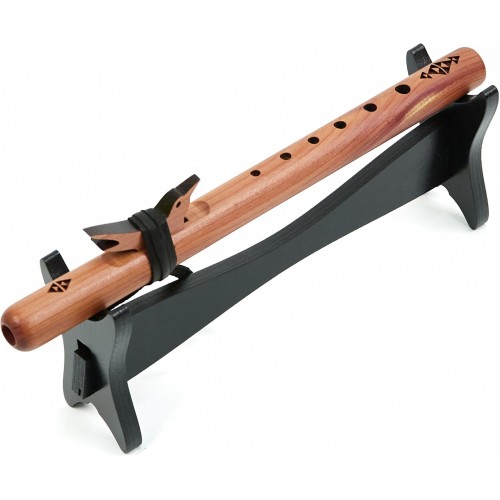
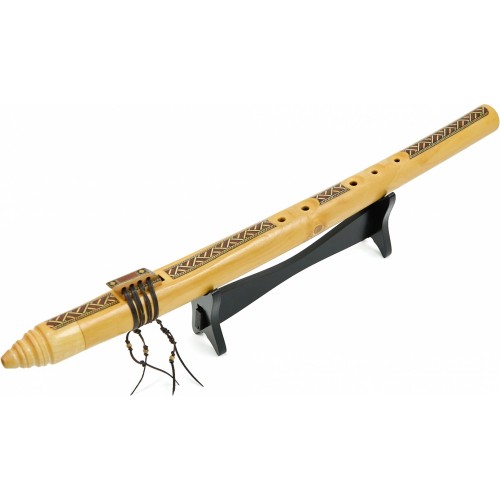
Native American flutes and meditation flutes are among the most popular wind instruments for spontaneous and intuitive playing. Native American flutes are tuned to the minor pentatonic scale in the range of one octave, so they are nice and simple to play, and all notes harmonize beautifully together. Meditation flutes have a six-hole system similar to Indian bansuri flutes; they are diatonic with chromatic possibilities and play in two octaves, so you can also play various types of more complex melodies on them.
Pentatonic flutes and ceramic flutes like Innato and Natey are close to them, which are beautiful and unique for free, meditative, and intuitive play.
Koncovka and fujara are overtone flutes from the Slovak tradition. Individual tones are not changed on them by covering holes, but by the force of breath, with which you gradually tune through a series of natural harmonic tones. The koncovka is a traditional shepherd's flute without holes, and the fujara is its larger and deeper-sounding Slovak relative.
Among flutes from different corners of the world, you will find the Indian bansuri, the Japanese shakuhachi, pan flutes, double flutes, and other ethnic flutes. Each of these instruments has its own construction, playing method, tuning, and tone color.
If you are looking for an instrument for melodies, general music-making, or children's play, recorder flutes and ocarinas will serve well. The kazoo is a simple, small instrument that will make even those who have never played a musical instrument before resonate with their voice.
The didgeridoo stands a bit apart. Instead of a melody, a deep, persistent tone full of overtones resonates from it, which resonates through the whole body. You will also find all the necessary accessories for all instruments.
What to focus on when choosing
The most important thing is the sound, tuning, instrument size, and, of course, its type. With flutes, the tuning, for example, A minor, G minor, or F#, is reflected mainly in the overall pitch and character of the tone. Lower tuning sounds fuller, softer, and calmer; higher tuning sounds more open and brighter.
Therefore, it is best to choose by listening or trying it out yourself. For each instrument on our website, you will find a sound sample or video so you can listen to how the instrument really sounds.
If you are playing the flute for the first time, feel free to reach for a Native American or meditation flute. They resonate easily, and you will soon be playing your own melodies on them.
It also depends on the size - longer flutes have a deeper tone and a greater distance between holes, while smaller ones are easier to hold and may be more suitable for those who have smaller hands.
And if you are looking for a truly unique and captivating sound, take a look at Innato and Natey flutes.
Who are wind instruments for
Wind instruments are beautiful for both beginners and experienced musicians.
-
Quieter flutes, such as Native American, meditation, or Innato and Natey, are suitable for meditation, quieting down, relaxation, and also for dynamic melodies, whether you play just for yourself or create a pleasant and inspiring atmosphere for others. Of course, they can also sound dynamic and cheerful.
-
Bansuri, shakuhachi, or pan flutes will be appreciated by those who want to get closer to a certain musical tradition or are looking for a distinctive sound.
-
Recorder flutes, ocarinas, and kazoo are great in the hands of children or for playing together at home, at school, or in a creative group.
You can come and try all wind instruments in person in our showroom in Jablonec nad Nisou, where we will be happy to show you how to play them. You can also listen to their sound in many videos and music samples on our website. And if you need help with your choice, get in touch with us - we will be happy to advise you even from a distance.
Frequently asked questions
Which wind instrument is most suitable for beginners?
Native American flutes resonate very easily. They are tuned to the minor pentatonic scale, so every tone and simple combination of tones sounds nice on them. Meditation flutes, Natey, Innato, and ocarinas are also easily accessible. If you are looking for something completely simple, perhaps for children, a recorder flute or a kazoo will serve well.
What is a didgeridoo and how is it played?
The didgeridoo is a traditional Australian wind instrument that does not play a melody but produces a deep, persistent tone full of overtones. The tone is resonated with relaxed, gently vibrating lips and further shaped by the breath, tongue, and oral cavity. More experienced players use circular breathing, thanks to which the instrument can sound continuously for several minutes without interruption.
What is the difference between a Native American and a meditation flute?
Native American flutes are tuned to the minor pentatonic scale in the range of one octave. Thanks to this, every tone and simple improvised melody sounds nice on them, so they are played very easily.
Meditation flutes have a six-hole system, they are chromatic and play in two octaves. Thanks to this, you can also play specific melodies and more complex compositions on them. Both types of flutes have a soft, airy tone; they differ mainly in range and playing possibilities.
How to take care of wooden wind instruments?
Wooden flutes and other wind instruments like a balanced environment. Long-term humidity or sudden temperature changes that can stress the wood do not suit them. After playing, it is advisable to let the instrument dry freely and store it in a dry place, ideally in a case.
The inside of wooden instruments can be lightly treated with suitable oil from time to time. You will find the necessary preparations as well as cases in the accessories, or we will be happy to advise you on your choice.
Are wind instruments suitable as a gift?
Yes, wind instruments are a great gift. They offer many possibilities at various price levels - from a small kazoo or ocarina to handmade Native American and meditation flutes, or the fascinating Innato and Natey. If you want to leave the choice to the recipient, you can also choose our gift voucher.