Which material to choose
-
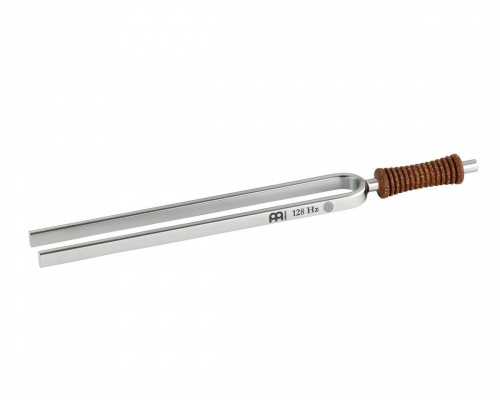
Steel tuning forks have a clearer, firmer, and stable tone. They are suitable for those who want a distinct sound, good duration, and practical use for meditation, relaxation, and application on the body.
-
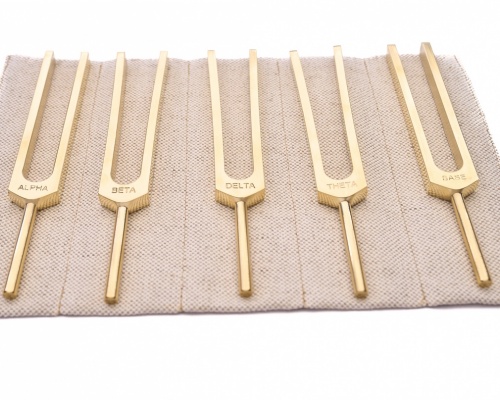
Brass tuning forks sound warmer, softer, and fuller. Their tone is usually more rounded and pleasant for quiet listening, gentle application on the body, and longer reverberation.
-
Crystal tuning forks have a very pure, clear, and long-sounding tone. They are used mainly for meditation, perception of space, gentle guidance of the tone around the body, and quiet listening.
-
Giant tuning forks have a deeper and more pronounced vibration. They are suitable mainly for the body, massage, acupressure, physiotherapy, and areas where you want to perceive a stronger resonant effect.
How a therapeutic tuning fork is used
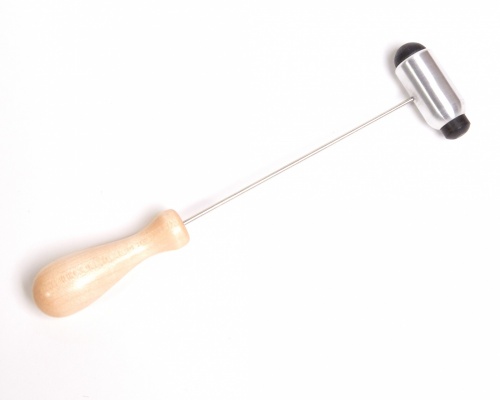
You gently sound the tuning fork using a rubber hammer or against a soft pad. For crystal tuning forks, a special crystal mallet is used. It is better to avoid hard surfaces so that the instrument is not damaged unnecessarily.
After sounding, you can let it sound freely, bring it close to your ear, or place it by the handle on a chosen spot on the body. Work slowly, sensitively, and without pressure. When the tone fades, simply sound the tuning fork again.
For body frequencies, one often works with placing the handle on the body. For planetary, Solfeggio, and meditative frequencies, you can perceive the tone itself, the reverberation, and the mood the tuning fork creates in the space more.
How to choose a suitable tuning fork
For a first acquaintance, universal frequencies are often chosen, for example, Earth / OM 136.10 Hz, 128 Hz for the body, 528 Hz from the Solfeggio series, or 432 Hz for quiet listening and meditation.
If you are mainly interested in application on the body, look at body frequencies, for example, 128 Hz, 64 Hz, or giant tuning forks. For meditation, quieting, and perception of tone, planetary, Solfeggio, brass, or crystal tuning forks are beautiful.
Tuning forks are not a substitute for medical care. They are gentle instruments for relaxation, body perception, meditation, and work with tones.
Savita Harmony Tuning Forks
Besides carefully selected tuning forks from other manufacturers, we also offer our own Savita Harmony series. We created it based on many years of experience with musical, meditative, and resonant instruments.
In creating this series, we focused on what is really important for a quality therapeutic tuning fork - a pure tone, stable frequency, pleasant reverberation, good grip, and sensitive transmission of vibration. We have included frequencies in the Savita Harmony series that have long been used for meditation, relaxation, gentle application on the body, breathwork, acupressure, and therapeutic use.
You will find steel as well as brass tuning forks among them, universal frequencies, Solfeggio tones, planetary tuning forks, as well as more specifically focused body frequencies. Each Savita Harmony tuning fork has its clear character - some are suitable mainly for listening and meditation, others for perception of vibration in the body, or for combination with other tuning forks.
Frequently asked questions
-
Which tuning fork to choose first?: A good first choice is usually 128 Hz for the body, Earth / OM 136.10 Hz for meditation and breath, or 528 Hz if you are interested in Solfeggio frequencies.
-
What is the difference between a steel and a brass tuning fork?: Steel sounds clearer and firmer. Brass has a warmer, softer, and fuller tone. The choice depends mainly on which sound character is more pleasant for you.
-
Can tuning forks be applied to the body?: Yes, many tuning forks can be sensitively applied by the handle to the body. For body frequencies, this is the main method of use. For planetary and meditative tuning forks, you can also let the tone sound in the space or bring it close to the ear.
-
How is a tuning fork sounded?: Most metal tuning forks are gently sounded using a rubber hammer or against a soft pad. Crystal tuning forks are sounded using a special crystal mallet.
-
Can I listen to and try out the tuning forks?: Yes. We are gradually adding sound and video samples for selected tuning forks. You can also listen to and try out the tuning forks in our showroom in Jablonec nad Nisou.